Gas Mixer for Embryo Culture Incubator – University of Munich

EMBRYO CULTURE INCUBATOR
MAMMALIAN HEART DEVELOPMENT
HIGH-RANGE O2 VARIATION
TARGET OF THE PROJECT
Investigation of Early Mammalian Heart Development
Description of the Application.
The mammalian heart is one of the first and most complex organs formed during embryogenesis. Highly specialized signaling programs are guiding cardiac progenitor cells toward their right position in the forming heart to ensure its proper function. However, dysregulation in these complex pathways during early development can lead to congenital heart defects. Thus, there is high demand in investigating the molecular and cellular processes leading to abnormal heart development for analyzing disease mechanisms and developing potential therapies.
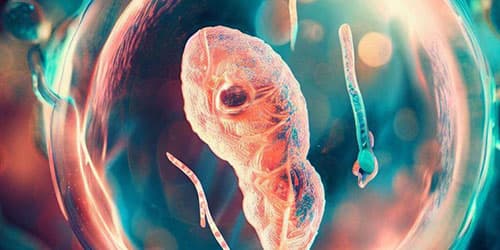
Murine whole embryo culture is a great tool for the investigation of early mammalian development ex vivo. For this, specific culture conditions are required. The most used system is a rotating culture with increasing serum concentration and continuous increase of oxygen during embryo development. The span of oxygen concentration varies between 5% and 95% during culture of embryonic day (E) 0.5 and E 10.5 mouse embryos.
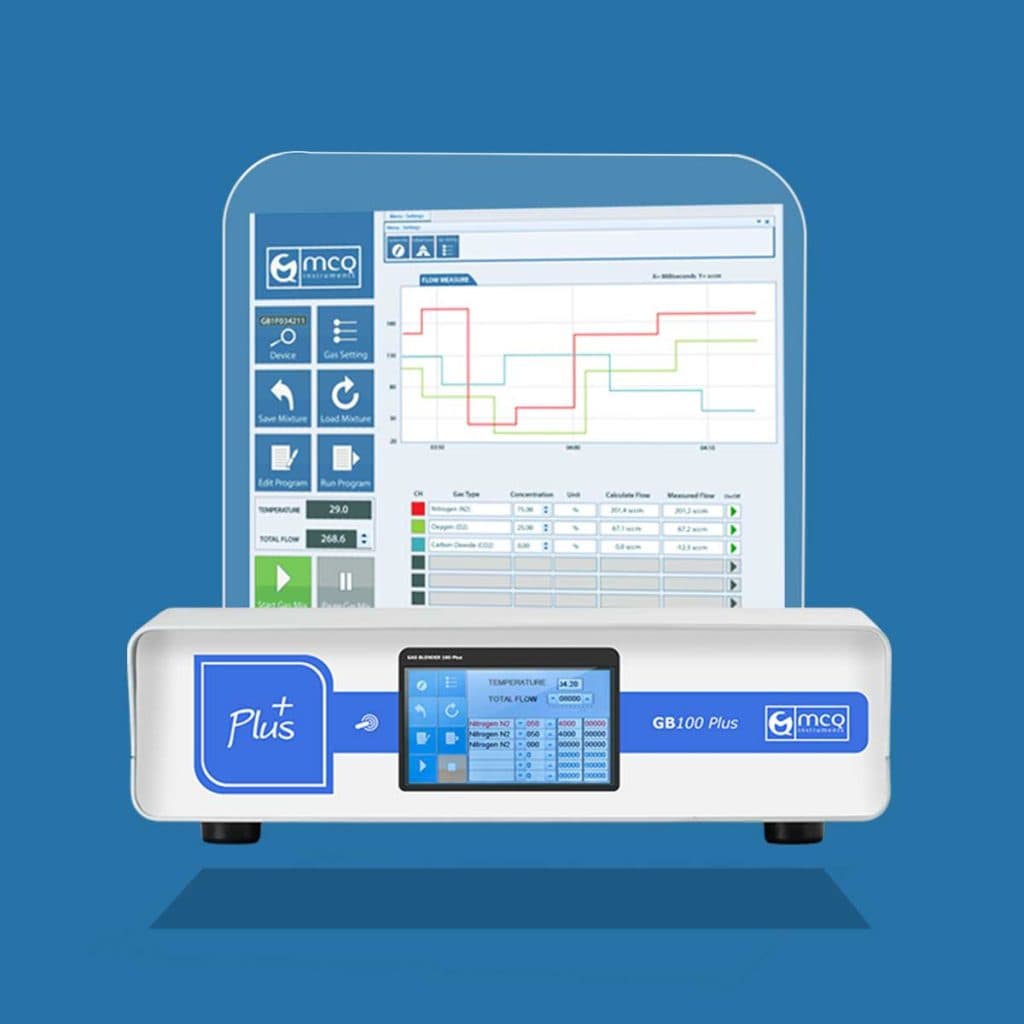
We will use the Gas Blender 100 Series to supply the rotating incubator with a very small flow of a defined gas mixture of 5% CO2, and varying concentrations of O2 in N2. Furthermore, the Software PRO Version will allow automatically increasing in oxygen concentration over time.
Benefits and Savings.
A traditional method would require several premixed gas bottles (N2, O2, and CO2) with different oxygen concentrations and a micro flow control valve to supply a very small flow to the rotating incubator.
The Technical University of Munich was seeking a solution for the culture of murine embryos to study early mammalian embryonic development.
Thanks to our Gas Blender 100 Series and the Software Creator PRO the research group can now set up a customized protocol providing an automatic supply of different oxygen concentrations for specific periods of time.
ABOUT THE UNIVERSITY
The Technical University of Munich (TUM) is one of Europe’s top universities. It is committed to excellence in research and teaching, interdisciplinary education and the active promotion of promising young scientists. The university also forges strong links with companies and scientific institutions across the world. TUM was one of the first universities in Germany to be named a University of Excellence. Moreover, TUM regularly ranks among the best European universities in international rankings.
Ref: Tum WebsiteMAIN BENEFITS
- •COST SAVINGS. The Gas Blender 100 Series is one of the cheapest multi-channel gas mixers available.
- •SUCCESSFUL ACHIEVEMENT. We helped to supply the rotating incubator with a very small flow of a defined gas mixture of 5% CO2, and varying concentrations of O2 in N2.
- •TIME SAVINGS. More flexibility and time saving to handle only 3 Cylinders of pure gases (N2, O2 and CO2). Several premixed gas bottles with different oxygen concentrations are no more necessary.
- •SOFTWARE AUTOMATION, Thanks to our Software PRO Version and its option “Automatic Program”, now the University of Munich can customize protocol providing automatic supply of different oxygen concentrations for specific periods of time.
- •MICRO FLOW. NO CUT-OFF. Our GB100 Series allows the University Hospital rechts der Isar of the Technical University of Munich to control the flow in all the calibration range, from 0,1 ml/min to 500 ml/min with NO cut-off.
- •FULL STABILITY. Thanks to our revolutionary method every gas flow has a great stability making possible to have a stable flow also for lower flow-range.