Gas Mixer for Gas Spectrometer - Politecnico di Bari - Polysense

GAS DILUTION
CONTROLLED FLOW
GAS SPECTROMETER
TARGET OF THE PROJECT
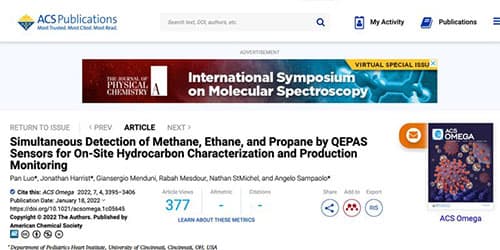
Dilution and Sampling Systems for Portable Hydrocarbon Spectrometers
Description of the Application.
The real-time and in-situ analysis of natural gas composition is a powerful tool in the oil&gas industry for estimating reserves, rock characterization, and assisted drilling.
Laser-based optical techniques represent suitable solutions for addressing this task since they exploit the laser’s narrow spectral resolution and allow for the unambiguous detection of trace gas for each component in downhole samples.
To date, it has been demonstrated that trace gas species can be optically detected with sensitivities down to parts–per–quadrillion concentration levels when operated in controlled environments, such as research laboratories. Therefore, laser-based techniques are excellent candidates for hydrocarbon identification in the part-per-billion up to part-per-million concentration scale for real-world applications.
The biggest challenge is rather the extension of the detection dynamic range to the percent scale. In fact, a typical sample of natural gas contains >80% of methane, and the rest is divided among the heavier molecules such as ethane, propane, and butane. In this context, the concentrations to be measured are way beyond the sensitivity of the spectrometer, and absorption non-linearity as well as saturation in the sensor response may occur.
One of the smartest solutions to address these issues is the dilution of the natural gas mixture with pure nitrogen in ratios that can vary from 1/10 down to 1/20.
Benefits and Savings.
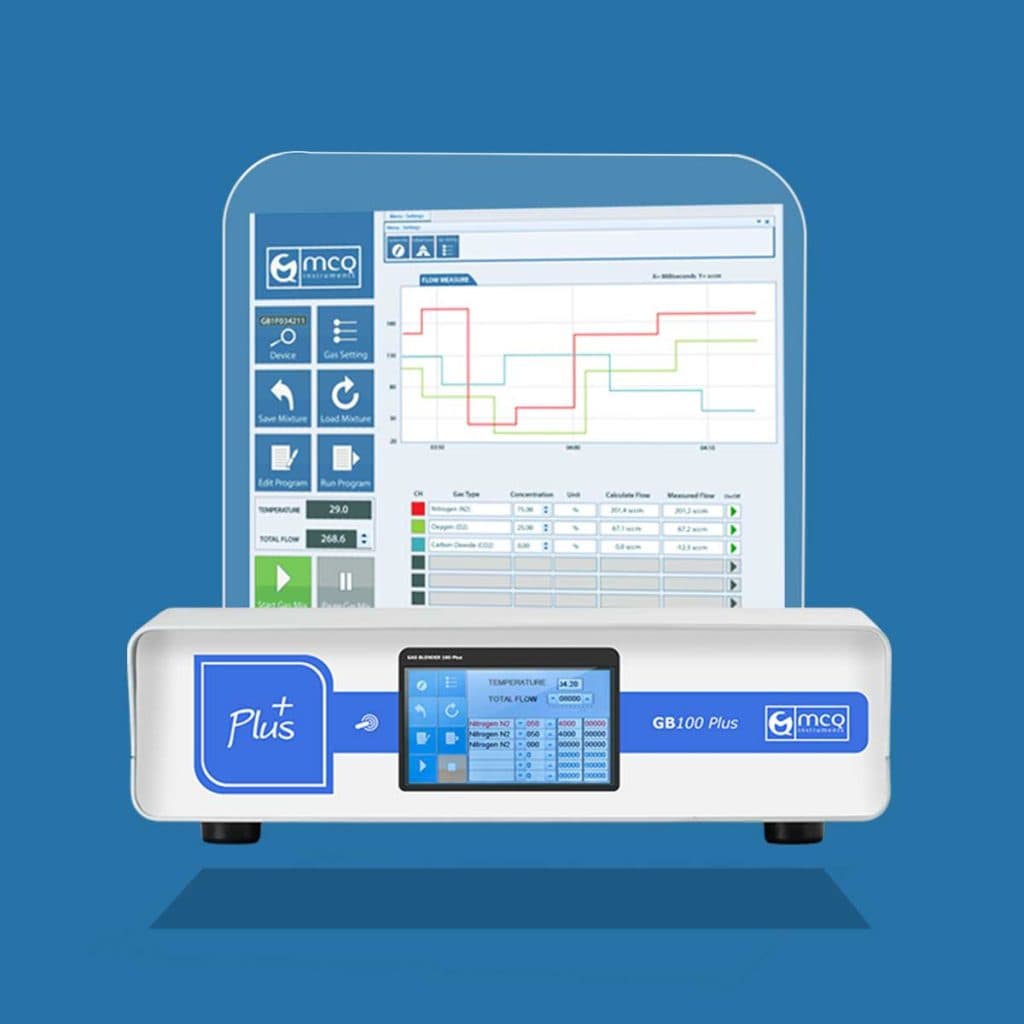
The gas blender GB100 Series turned out to be a reliable and compact device for diluting the gas sample and generate a controlled flow to be directly fed to the spectrometer. With this configuration the sensor is able to operate in a comfortable range, measure the hydrocarbon concentrations and re-calculate the actual values according to the dilution ratio used. The potential developments for in-situ gas analyzers is the integration of dilution/sampling systems inside the sensors.
READ THE SCIENTIFIC PAPER.
Journal: SPIE Digital Library. Partial least squares regression as novel tool for gas mixtures analysis in quartz-enhanced photoacoustic spectroscopy.ABOUT THE UNIVERSITY
The Polytechnic University of Bari (Italian: Politecnico di Bari) is a university located in Bari, Italy. It was founded in 1990 and it is organized in 3 Faculties. In 2016, around 9752 students were enrolled. In 2013, the professors, researchers and assistants amounted to 302 people.The Polytechnic University of Bari is the youngest among the Italian polytechnic universities. Even though other Italian universities also incorporate engineering and science faculties, Italian polytechnic universities are focused on technological faculties and subjects.
Ref: WikipediaMAIN BENEFITS
- •GAS MIXER VS MASS FLOW CONTROLLER. The GAS MIXER channels it’s more compact than typical flow controller meters and can be specifically calibrated on the mixture to be used.
- •WITHOUT MCQ INSTRUMENTS? 3 Mass Flow Controllers with Power control Unit, tubes, NO-Software and different Gas Mixture Cylinders.
- •TIME SAVING. Instead of changing a calibration cylinder for each point, our Gas Mixer uses pure gas allowing the Politecnico di Bari to set all the desired calibration points in just a few steps.
- •SOFTWARE AUTOMATION. Thanks to our Software PRO version and its option “Automatic Program”, now Politecnico di Bari can bring forward experiments in automation, painlessly.
- •MICRO FLOWS. NO CUT-OFF. OUR GB100 Series allows you to control the flow in all the calibration range, from 0,1 ml/min to 500 ml/min with NO cut-off.
- •REVIEW IN PILLS. We helped the Politecnico di Bari to get highly precise and stable micro flows of gas to fed a spectometer in a easy way thanks to our instrument and software.