Gas Mixer for Oxygen regulated microscope perfusion system - Oxford University

MICROSCOPE PERFUSION SYSTEM
COST AND SPACE SAVINGS
DYNAMIC GAS MIXTURES
TARGET OF THE PROJECT
Oxygen-regulated microscope perfusion system
Description of the Application.
University of Oxford is interested in understanding cellular responses to changes in oxygen levels, relevant to the study of diseases such as cancer, stroke, and in transplant medicine.
The activity of human or mouse cells cultured in vitro is monitored using real-time fluorescent readouts of changes in intracellular Ca2+ or NADH levels, in response to a reduction in available O2. In our setup, cells are superfused with medium pre-equilibrated to 5% CO2 and a defined, variable pO2, and fluorescence is monitored by epifluorescence microscopy.
To this end, the University of Oxford required a method of generating gas mixtures containing a wide variety of physiologically relevant oxygen concentrations, with which superfusing solutions can be bubbled to equilibrate.
This is traditionally achieved using pre-mixed compressed gas cylinders, though this requires substantial infrastructure and space, offering limited flexibility in terms of available gas mixtures.
Moreover, obtaining custom mixtures containing less common O2 concentrations can be costly, both financially and timely. With N2 and CO2 available via a central source within the building, electronic gas mixers offered a more flexible and user-friendly option to deliver custom gas mixtures.
Benefits and Savings.
BENEFITS – Availability of customizable gas mixtures without any change in hardware or need for additional supplies.
COST SAVINGS – Using building supplies of N2 and CO2 will reduce the long-term running costs of the equipment, and will negate the need to order custom gas mixtures supplied in cylinders.
TIME SAVINGS – The immediate availability of any gas mixture required (5% CO2, 0-18% O2) is a potentially substantial time-saving feature, as ordering custom gas mixtures can take 1 month.
ABOUT THE UNIVERSITY
The University of Oxford is a collegiate research university in Oxford. There is evidence of teaching as early as 1096, making it the oldest university in the English-speaking world and the world’s second-oldest university in continuous operation. The university is made up of 39 semi-autonomous constituent colleges, six permanent private halls, and a range of academic departments which are organised into four divisions.
Ref: WikipediaMAIN BENEFITS
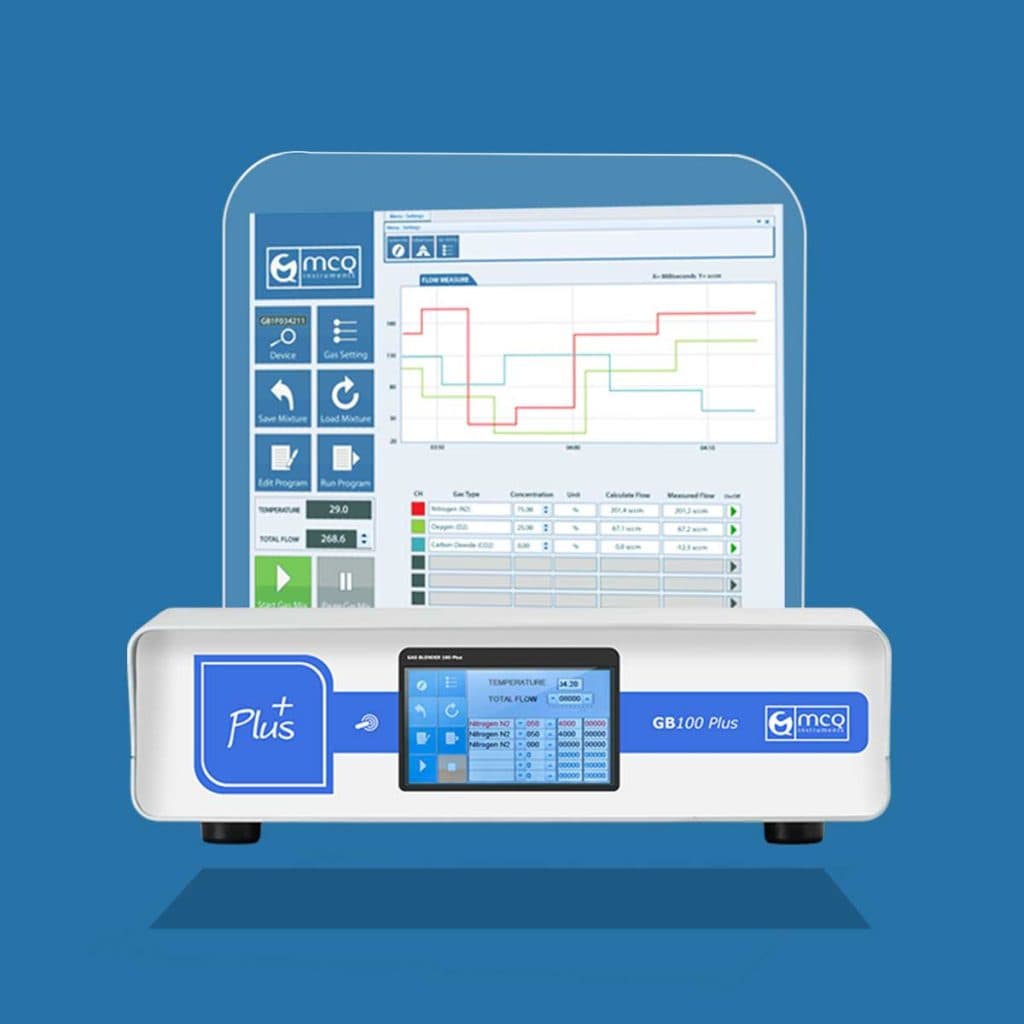
- •COST AND SPACE SAVING. Our GB100 Series allows Univerisity of Oxford to have a method of generating gas mixtures containing a wide variety of physiologically oxygen concentrations. This is traditionally achieved using pre-mixed compressed gas cylinders, though this requires substantial infrastructure and space, with offering limited flexibility in terms of available gas mixtures.
- •SUCCESSFUL ACHIEVEMENT. GB100 Series offers a more flexible and user-friendly option to deliver custom gas mixtures to an oxygen regulated microscope perfusion system.
- •TIME SAVING: 70%. Easier setup management of the hardware. Easier setup management of the software.
- •SOFTWARE AUTOMATION. Thanks to our Software PRO Version and its easy-touse user interface, now the University of Oxford can easy set all the experiment through our software.
- •MICRO FLOW RATES. Our GB100 Series allows the University of Oxford to control the flow in all the calibration range, from 0,1 ml/min to 500 ml/min with NO cut-off.
- •GAS MIXER VS MASS FLOW CONTROLLERS. The ability to blend O2 simulations on-demand is an incredibly powerful tool in the development and provides a level of flexibility that gas cylinders cannot provide.