Gas Mixer for Surgical Oncology Program - NIH & NCI - Gas mixer for Liver Perfusion

PERFUSION SYSTEM
ONCOLOGY RESEARCH
EASY TO USE & FLEXIBILITY
TARGET OF THE PROJECT
Surgical Oncology Program – Normothermic Ex Vivo Liver Perfusion
Description of the Application.
NIH-NCI lab perfuses human and porcine livers on an automated machine that recapitulates all vital human organ systems.
These systems include a cardiovascular system (consisting of centrifugal pumps and infusions of vasoactive substances), a pulmonary system (consisting of a diaphragm that provides compression to the liver to prevent edema and pressure necrosis), an endocrine system (consisting of a continuous glucose monitor with automated insulin and glucagon infusions), a renal system (consisting of an in-line dialysis circuit), and a central nervous system (consisting of a repository of Python code that integrates each system together to allow for automated perfusions).
The system is also fitted with a variety of pressure, flow, and blood gas sensors to monitor perfusions. NIH-NCI’s goal is to maintain the viability of the liver ex vivo for as long as possible to study the effects of oncotherapeutics on tumors in the liver.
NIH-NCI are currently optimizing the machine using porcine livers. Once fully optimized, they will move on to perfusing whole human livers deemed unfit for transplant.
Finally, NIH-NCI will perfuse tumor-bearing human liver segments from patients undergoing clinically indicated resections in the OR.
Benefits and Savings.
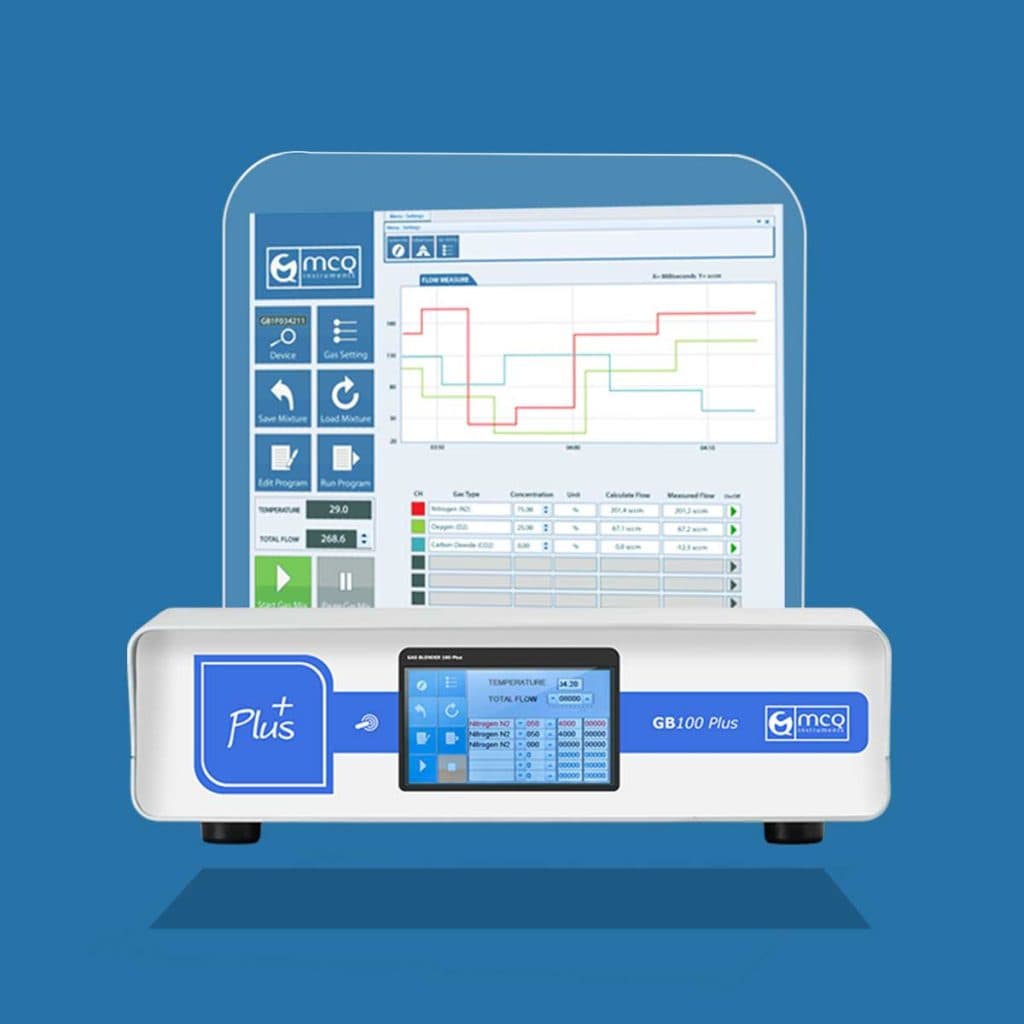
MCQ Instruments provided an efficient solution for an Easy and Precise Blending of the needed Gas Mixtures. NIH reported also the benefit of spending less time titrating adequate gas mixtures.
ABOUT THE RESEARCH
The National Institutes of Health (NIH), a part of the U.S. Department of Health and Human Services, is the nation’s medical research agency — making important discoveries that improve health and save lives. The National Cancer Institute (NCI) is the federal government’s principal agency for cancer research and training.
Ref: NIH WebsiteRef: NCI WebsiteMAIN BENEFITS
- •GAS MIXER VS MASS FLOW CONTROLLERS. The ability to blend O2 simulations on-demand is an incredibly powerful tool in the development and provides a level of flexibility that gas cylinders cannot provide.
- •SUCCESSFUL ACHIEVEMENT. Our Gas Blenders offer a more flexible and user-friendly option to deliver custom gas mixtures to an oxygen regulated microscope perfusion system.
- •TIME SAVINGS. Easier setup management of the hardware. Easier setup management of the software. Less time spent titrating adequate gas mixtures.
- •SOFTWARE AUTOMATION. Thanks to our Software PRO Version and its easy-to use user interface, now NIH/NCI can easy set all the experiment through our software. Easy blending of gases, runs without user input.
- •MICRO FLOWS. NO CUT-OFF. Our Gas Blenders allow NIH-NCI to control the flow in all the calibration range, from 0,1 ml/min to 500 ml/min with NO cut-off.
- •AUTOMATION. Easy blending of gases, runs without user input.