Gas Mixer for Intermittent Hypoxia – Universite Grenoble Alpes

INTERMITTENT HYPOXIA
RAPID OXYGEN VARIATION
MICRO FLOW OF GAS
TARGET OF THE PROJECT
Intermittent hypoxia in cell culture
Description of the Application.
An innovative intermittent hypoxia model for cell cultures allowing fast PO2 oscillations with minimal gas consumption. Performing hypoxia-reoxygenation cycles in cell culture with a cycle duration accurately reflecting what occurs in obstructive sleep apnea (OSA) patients is a difficult but crucial technical challenge.
Our goal was to develop a novel device to expose multiple cell culture dishes to intermittent hypoxia (IH) cycles relevant to OSA with limited gas consumption. With gas flows as low as 200 ml/min, our combination of plate holders with gas-permeable culture ware generates rapid normoxia-hypoxia cycles.
Cycles alternating 1 min at 20% O2 followed by 1 min at 2% O2 resulted in PO2 values ranging from 124 to 44 mmHg. Extending hypoxic and normoxic phases to 10 min allowed PO2 variations from 120 to 25 mmHg. The volume of the culture medium or the presence of cells only modestly affected the PO2 variations.
In contrast, the nadir of the hypoxia phase increased when measured at different heights above the membrane. We validated the physiological relevance of this model by showing that hypoxia-inducible factor-1 expression was significantly increased by IH exposure in human aortic endothelial cells, murine breast carcinoma (4T1) cells as well as in a blood-brain barrier model (2.5-, 1.5-, and 6-fold increases, respectively).
In conclusion, we have established a new device to perform rapid intermittent hypoxia cycles in cell cultures, with minimal gas consumption and the possibility to expose several culture dishes simultaneously. This device will allow functional studies of the consequences of IH and decipher the molecular biology of IH at the cellular level using oxygen cycles that are clinically relevant to OSA.
READ THE SCIENTIFIC PAPER.
An innovative intermittent hypoxia model for cell cultures allowing fast Po2 oscillations with minimal gas consumption.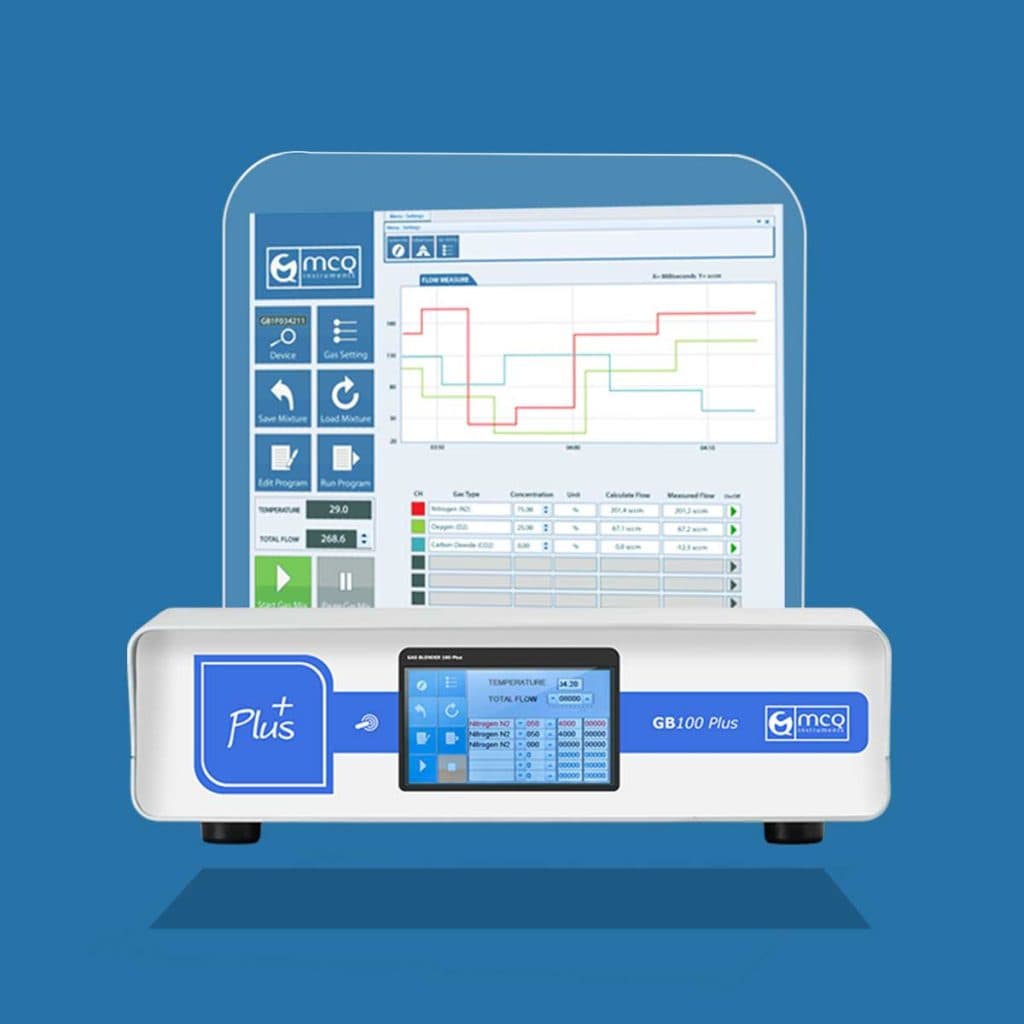
Benefits and Savings.
Université Grenoble Alpes used the gas blenders to deliver gas mixes to a cell culture setup, in order to obtain rapid variations of oxygen (between 1 and 21%, changing every few minutes). They had air, N2, and CO2 inputs.
The gas mix is delivered underneath cell culture plates that have a gas-permeable bottom, thus enabling rapid oxygen changes at the cell level.
ABOUT THE UNIVERSITY
Université Grenoble Alpes (UGA) is both firmly anchored at the local level and has a solid international reputation. Its foundation stems from the aggregation of the former Université Grenoble Alpes and the most prestigious higher education and research institutions in Grenoble: Grenoble INP (School of Engineering), Sciences Po Grenoble (School of Political Science and Public Policy) and ENSAG (Grenoble School of Architecture).
Ref: Université Grenoble Alpes WebsiteMAIN BENEFITS
- •COST SAVING: 30%.The effectiveness of our Gas Blenders reduces consistently the gas consumption of 30%.
- •SUCCESSFUL ACHIEVEMENT. Obtaining rapid variations of oxygen (between 1 and 21%), changing every few minutes. The gas mix is delivered underneath cell culture plates that have a gas-permeable bottom, thus enabling rapid oxygen changes at the cell level.
- •TIME SAVING. Easier setup management of the hardware. Easier setup management of the software.
- •SOFTWARE AUTOMATION. Thanks to our Software PRO Version and its option “Automatic Program”, now the University Grenoble Alpes can bring forward experiments in automation.
- •MICRO FLOW. NO CUT-OFF. Our GB100 Series allows the University Grenoble Alpes to control the flow in all the calibration range, from 0,1 ml/min to 500 ml/min with NO cut-off.
- •FLOW STABILITY. Thanks to our revolutionary method every gas flow has a great stability making possible to have a stable flow also for lower flow-range.