Controlled Gas Environments for 3D Cell Culture Systems
Introduction
Three-dimensional (3D) cell culture systems, including spheroids, organoids, and embryoid bodies, are increasingly used to simulate the structural and functional complexity of in vivo tissues.
Unlike traditional 2D cultures, these systems develop relevant gradients of oxygen, nutrients, and metabolites, which influence cell behavior, differentiation, and viability.
Among these parameters, oxygen plays a central role. In 3D systems, oxygen diffusion is limited, leading to the formation of gradients between the outer and inner regions of the structure.
As a result, cells can experience conditions ranging from physioxia to hypoxia or even anoxia within the same construct. Controlling external oxygen levels is therefore necessary to study and standardize these effects.
Oxygen as an Experimental Variable in 3D Cultures.
In 3D cultures, oxygen availability is not uniform. It depends on both the external environment and the size and density of the structure. Small changes in oxygen concentration can lead to significant differences in cell proliferation and viability, stem cell maintenance and differentiation, metabolic activity and formation of necrotic or hypoxic cores.
For embryoid cultures, maintaining physioxic conditions is critical to minimize oxidative stress. Standard atmospheric oxygen (~21% O₂) can induce artificial stress responses, affecting cell differentiation and viability.
Because of this, controlling oxygen concentration in the surrounding environment is essential to obtain reproducible and interpretable results. This is particularly relevant when comparing different culture conditions or transferring protocols between laboratories.
Limitations of Conventional Approaches
Standard incubators typically operate at atmospheric oxygen concentration (~21% O₂), which does not reflect physiological conditions for most tissues. In addition, they provide limited flexibility when different oxygen levels are required
Common limitations:
- •Inability to precisely adjust oxygen concentration
- •Reliance on fixed hypoxia chambers or premixed gases
- •Difficulty in generating oxygen gradients or testing multiple conditions
- •Variability between experiments due to manual setup
These constraints can limit the study of oxygen-dependent processes and reduce reproducibility across experiments.
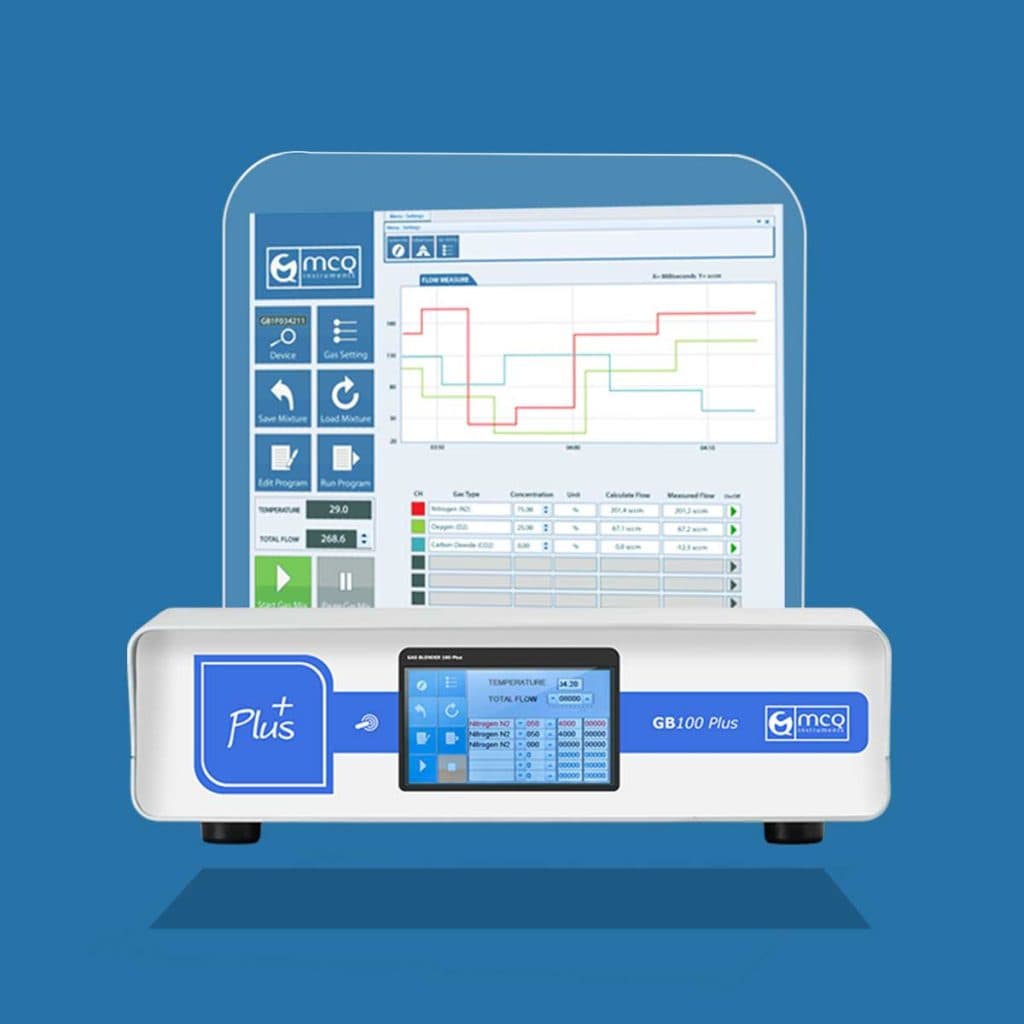
Use of Gas Mixers in 3D Cell Culture
Gas mixers allow the output of defined gas compositions by combining gases such as O₂, CO₂, and N₂. Oxygen concentration can be adjusted to match physiological levels or specific experimental conditions.
The gas mixture can be delivered to incubators, sealed culture systems, or dedicated chambers used for 3D cultures. This enables control over the external environment, which in turn defines the oxygen gradient within the spheroids or organoids.
Gas composition can be set as a fixed condition or varied over time. This makes it possible to simulate changing oxygen levels or to perform titration experiments to determine how cells respond across a range of conditions.
Practical Advantages
- •Controlled oxygen environment: External oxygen levels can be adjusted to study physioxia, hypoxia, or reoxygenation
- •Reproducibility: Stable gas composition reduces variability between experiments
- •Improved model consistency: Better control of oxygen gradients within 3D structures
- •Process optimization: Conditions can be identified at small scale and applied to larger or more complex systems
Applications
Gas mixers can be used in a range of 3D cell culture applications, including:
- •Tumor spheroids and cancer models
- •Organoid cultures (e.g., intestinal, brain, liver)
- •Stem cell differentiation and maintenance
- •Embryoid body formation
- •Hypoxia and reoxygenation studies
- •Drug screening under controlled oxygen conditions
Hardware Configuration
A typical MCQ Gas Mixer configuration for 3D cell culture applications includes:
- •Channel 1: Nitrogen (N₂)
- •Channel 2: Carbon dioxide (CO₂)
- •Channel 3: Oxygen (O₂)
Gases should be dry and high purity. Gas cylinders are connected to the mixer using 6 mm tubing, with check valves installed to prevent backflow between lines.
Each gas is regulated independently and combined to generate the desired composition. The output is delivered to the experimental system.
Depending on the setup, the gas mixture can be supplied to:
- •Cell culture incubators adapted for external gas input
- •Hypoxia chambers or controlled atmosphere boxes
- •Sealed culture plates or flasks
- •Microfluidic or perfusion-based 3D culture systems
Gas composition can be maintained constant or programmed to change over time. This allows experiments such as gradual oxygen reduction, cyclic hypoxia, or reoxygenation.
For long-term cultures, maintaining a stable gas flow helps ensure consistent environmental conditions. Monitoring of oxygen, carbon dioxide, temperature, and humidity within the culture system is recommended to verify experimental conditions and improve reproducibility.
Institutions using our mixers to simplify their research on 3D cell-culture
University of California, San Francisco - Prof. Hirotake Komatsu Lab:
Shang, Kuang-Ming et al. A novel approach to determine the critical survival threshold of cellular oxygen within spheroids via integrating live/dead cell imaging with oxygen modeling. American journal of physiology. Cell physiology vol. 326,4 (2024): C1262-C1271. doi:10.1152/ajpcell.00024.2024
The University of Sydney - Dr. Cristina M Cook Lab:
Martinez, Chloe-Anne et al. Intermittent hypoxia enhances the expression of hypoxia inducible factor HIF1A through histone demethylation. The Journal of biological chemistry vol. 298,11 (2022): 102536. doi:10.1016/j.jbc.2022.102536
Grenoble Alpes University: Prof. Diane Godin-Ribuot Lab:
Minoves, Mélanie et al. Chronic intermittent hypoxia, a hallmark of obstructive sleep apnea, promotes 4T1 breast cancer development through endothelin-1 receptors. Scientific reports vol. 12,1 12916. 28 Jul. 2022, doi:10.1038/s41598-022-15541-8
References
- •Langan, Laura M et al. Direct Measurements of Oxygen Gradients in Spheroid Culture System Using Electron Parametric Resonance Oximetry. PloS one vol. 11,2 e0149492. 22 Feb. 2016, doi:10.1371/journal.pone.0149492
- •Tse, Hubert M et al. The Importance of Proper Oxygenation in 3D Culture. Frontiers in bioengineering and biotechnology vol. 9 634403. 30 Mar. 2021, doi:10.3389/fbioe.2021.634403
- •Leite, Roberta Ferreira et al. Oxidative Stress Alters the Profile of Transcription Factors Related to Early Development on In Vitro Produced Embryos. Oxidative medicine and cellular longevity vol. 2017 (2017): 1502489. doi:10.1155/2017/1502489