Gas Mixers for Differential Oxygenation in Tumour Microenvironment Studies
Exposing two interacting cell populations to different oxygen levels within a single co-culture
Introduction
Hypoxia is one of the defining features of solid tumours, and it is now firmly associated with aggressive tumour behaviour and poor prognosis. What is less often reproduced in the laboratory is that tumour hypoxia is not uniform. Oxygen diffuses only a limited distance from a blood vessel into surrounding tissue, so a gradient forms across the tumour: cells immediately adjacent to the vasculature experience physiological oxygen levels of around 12%, while cells only a couple of hundred micrometres away may sit below 1%.
This gradient is not an experimental detail. It is thought to be one of the mechanisms driving the recruitment of circulating immune cells into the tumour. Macrophages arriving from the bloodstream are well oxygenated; the tumour cells they are being drawn towards are not. The crosstalk between them therefore takes place across an oxygen difference.
Conventional co-culture systems cannot reproduce this. In a standard transwell or Boyden chamber assay, both cell populations sit in the same atmosphere and therefore experience the same oxygen tension. Researchers wanting to study hypoxia have generally had to choose between exposing everything to hypoxia, or pre-conditioning one cell type in hypoxia and then transferring it into a normoxic assay, in which case the cells are no longer hypoxic during the interaction being measured. Three-dimensional spheroid models do generate an internal gradient, but it is self-generated, poorly controlled, dependent on sphere size and metabolic rate, and it does not allow two distinct cell populations to be held at separately defined oxygen levels.
The solution developed in published work is elegantly simple. Cells are cultured on a thin gas-permeable membrane. A gas mixer delivers a precisely defined mixture to a chamber directly beneath that membrane, setting the oxygen tension experienced by the cells growing on it. A conventional transwell insert is suspended a few millimetres above, carrying the second cell population, whose oxygen tension is set instead by the incubator atmosphere. The two populations share the same medium and exchange soluble signals freely, yet each sits at its own, independently controlled oxygen level.
This approach provides several advantages:
- •Independent and simultaneous control of oxygen at two interacting cell populations within one co-culture
- •Precise and stable definition of the hypoxic compartment, for example 1% O₂, while the second population remains at physiological normoxia
- •Faithful reproduction of the oxygen gradient found between the tumour vasculature and the tumour interstitium
- •Rapid gas equilibration through the permeable membrane, with published diffusion times of the order of a few seconds
- •Compatibility with conventional transwell inserts, and therefore with established migration, invasion and co-culture assays
- •The same configuration can deliver steady or cyclic oxygen profiles, extending the model to intermittent hypoxia
Because the gas mixer defines the composition delivered beneath the membrane, the hypoxic compartment is set by an instrument rather than by cellular consumption, which makes the condition reproducible between experiments and independent of cell density or metabolic rate.
In conclusion, this approach allows researchers to ask questions that conventional co-culture cannot address: how hypoxic tumour cells recruit and reprogramme immune cells, how oxygen gradients influence migration and invasion, and how the response differs between tumour types.
Gas Blenders & Gas Mixer Manager
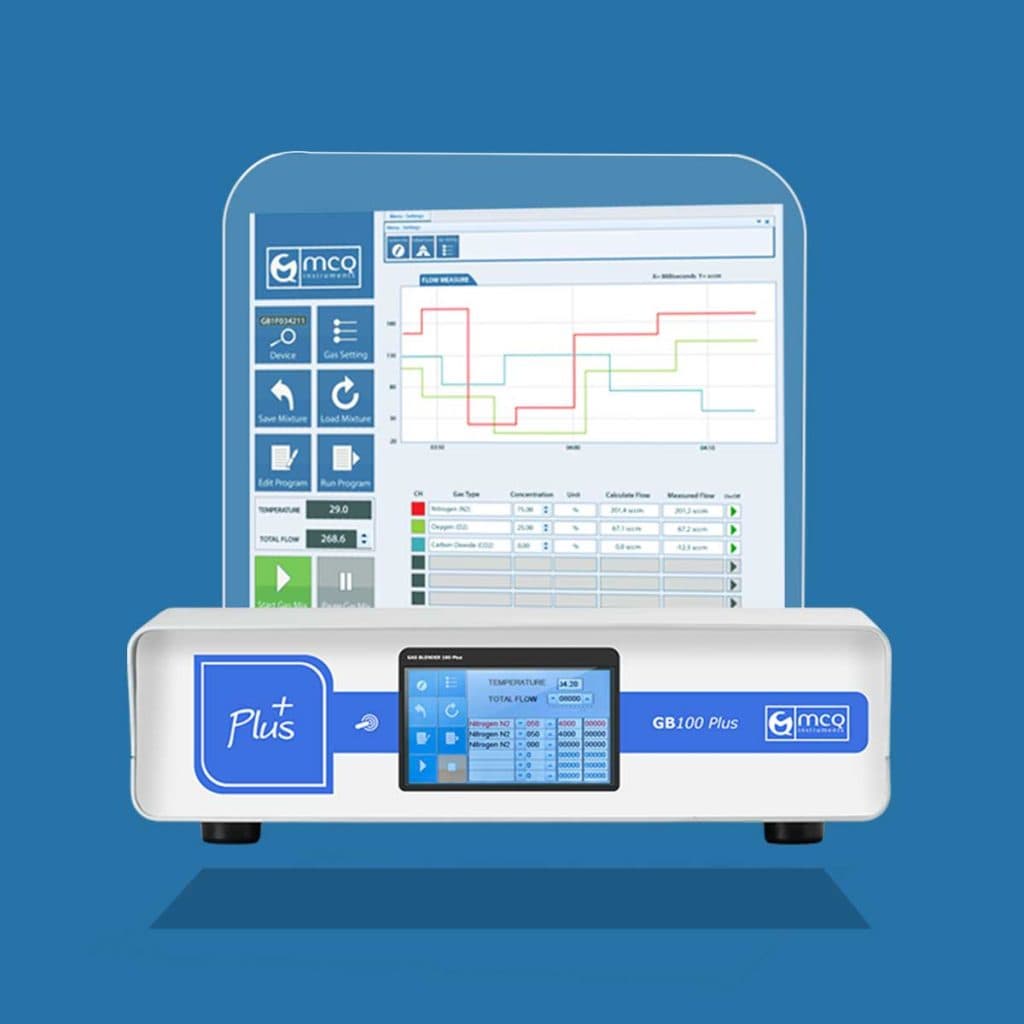
The Gas Blenders Series are the improved solutions proposed by MCQ. Designed following the Lab in Box concept, the MCQ Gas Blenders are high precision instruments, easy to configure, and adaptable to many different lab applications, they offer more efficiency and an innovative quick, and easy way for mixtures management, all in a compact case.
The Gas Blenders work with up to 6 components of gas mixtures, each gas media connected to a dedicated instrument channel for which MCQ guarantees high accuracy (1.0% of setpoint), high repeatability (0.16% of reading value), and the fastest response time for setpoint value change now available in the market.
The instruments work with dry gases and the channels are always calibrated with native gases following the customer's request. For gas mixture management, the MCQ Gas Mixture Creator Software is also provided.
Easy to use, and compatible with any common desktop or laptop PC (or touch screen for the latest products), the MCQ Software allows taking complete control over the gas mixer and its functions, letting the users start working with dynamic gas mixtures immediately with full automation.
Hardware Configuration
The gases typically used in this setup are:
- •Channel 1: Nitrogen (N₂) — to displace oxygen and define the hypoxic setpoint
- •Channel 2: Oxygen (O₂) or air — to set the required oxygen fraction
- •Channel 3: Carbon dioxide (CO₂) — typically at 5%, to maintain physiological medium pH
The pure gas cylinders are connected to the instrument through 6 mm diameter tubing, and a check valve is installed on each line to prevent back-flow between channels.
Each gas is connected to and regulated by a dedicated channel of the MCQ Gas Mixer. The instrument blends the incoming gases to the target composition and a final 6 mm outlet tube delivers the mixture to the lower chamber of the co-culture device, immediately beneath the gas-permeable culture membrane.
In the published configuration, the device is assembled from two polydimethylsiloxane layers separated by a thin gas-permeable membrane on which the first cell population is cultured. The wells of the upper layer are dimensioned to accept standard commercial transwell inserts, which carry the second cell population approximately 3 millimetres above. Oxygen reaching the lower population is governed entirely by the mixture supplied by the gas mixer and diffusing through the membrane, while oxygen at the upper population is governed by the incubator atmosphere. Because the membrane is thin and highly permeable, the gas stimulus reaches the cells within a few seconds, which also makes the configuration suitable for cyclic oxygen protocols.
By adjusting the setpoints through the MCQ control software, researchers can define the hypoxic level precisely, hold both compartments at the same oxygenation as a control condition, or program dynamic oxygen profiles. The whole device is inexpensive to fabricate, can be produced with a conventional 3D printer, and is therefore implementable in most cell biology laboratories.
Institutions already using our Gas Mixers for differential oxygenation research
Universitat de Barcelona (Unitat de Biofísica i Bioenginyeria), CIBER de Enfermedades Respiratorias, Institute for Bioengineering of Catalonia, IDIBAPS, and University of Missouri School of Medicine
Campillo, N., Falcones, B., Otero, J., Colina, R., Gozal, D., Navajas, D., Farré, R., Almendros, I. Differential Oxygenation in Tumor Microenvironment Modulates Macrophage and Cancer Cell Crosstalk: Novel Experimental Setting and Proof of Concept. Frontiers in Oncology vol. 9 43 (2019). doi:10.3389/fonc.2019.00043
In this study, oxygen concentration over the cell culture was tightly controlled by direct diffusion through a gas-permeable membrane from a gas source, a Gas Blender 100 Series (MCQ Instruments, Rome, Italy), connected to the lower layer of a custom co-culture device. Tumour cells cultured on the membrane were held at 1% O₂ while macrophages on a transwell insert above remained at 16 to 19% O₂, reproducing the oxygenation difference between the tumour interstitium and the vascular network. Under these differential conditions, hypoxic melanoma and breast cancer cells significantly increased macrophage migration, reduced M1 polarisation and increased the M2/M1 ratio, and showed enhanced proliferation, whereas renal cancer cells produced no significant change. Notably, the results obtained under a differential oxygen gradient differed from those obtained in conventional assays where both cell types share the same oxygenation.
Seno Medical Instruments — opto-acoustic breast imaging
Zalev, J. et al. Opto-acoustic imaging of relative blood oxygen saturation and total hemoglobin for breast cancer diagnosis. Journal of Biomedical Optics, SPIE. Related conference proceeding: Characterization of opto-acoustic color mapping for oxygen saturation of blood using biologically relevant phantoms. Proc. SPIE vol. 10878 108781Q (2019). doi:10.1117/12.2506906
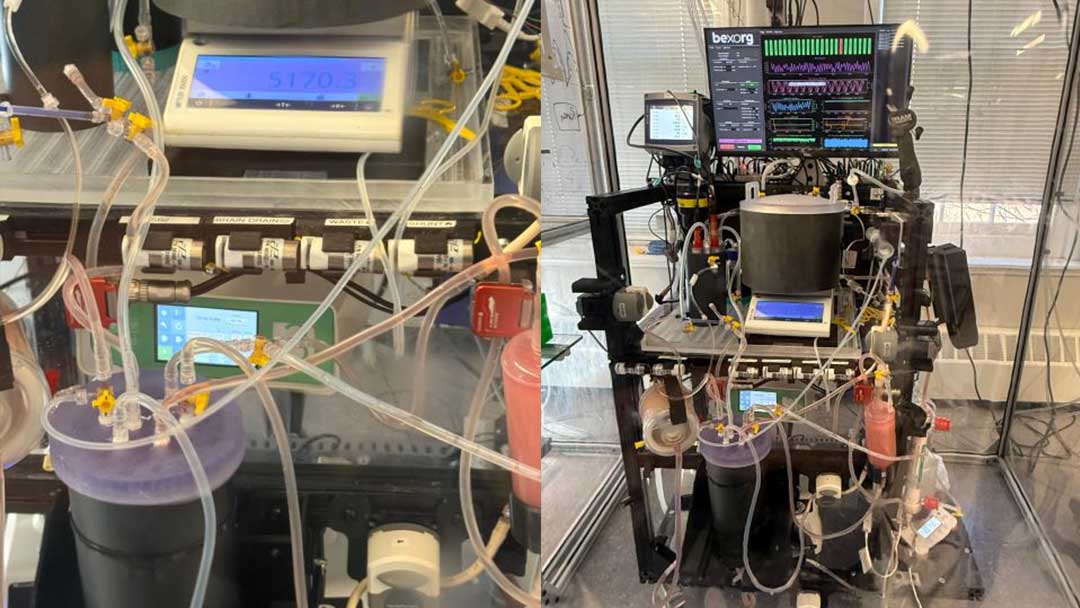
This work applies the same principle of independent oxygen control in an imaging context. Breast-tissue-mimicking phantoms were built containing two separate vessels filled with whole blood, and a flow system combining a gas mixer with a membrane oxygenator adjusted the oxygen saturation of each vessel independently. Datasets acquired with an investigational Imagio breast imaging system established the smallest oxygen saturation difference that could be resolved between two 1.6 mm vessels at 15 mm depth, supporting the use of colour-mapped opto-acoustic imaging to distinguish benign from malignant lesions and potentially reduce the need for biopsy.
References
- •Campillo, N et al. Differential Oxygenation in Tumor Microenvironment Modulates Macrophage and Cancer Cell Crosstalk: Novel Experimental Setting and Proof of Concept. Frontiers in Oncology vol. 9 43 (2019). doi:10.3389/fonc.2019.00043
- •Zalev, J et al. Characterization of opto-acoustic color mapping for oxygen saturation of blood using biologically relevant phantoms. Proc. SPIE vol. 10878 108781Q (2019). doi:10.1117/12.2506906
- •Farré, R., Almendros, I., Montserrat, J.M., Gozal, D., Navajas, D. Gas Partial Pressure in Cultured Cells: Patho-Physiological Importance and Methodological Approaches. Frontiers in Physiology vol. 9 1803 (2018). doi:10.3389/fphys.2018.01803
- •Campillo, N et al. A Novel Chip for Cyclic Stretch and Intermittent Hypoxia Cell Exposures Mimicking Obstructive Sleep Apnea. Frontiers in Physiology vol. 7 319 (2016). doi:10.3389/fphys.2016.00319
- •Lewis, D.M et al. Intratumoral oxygen gradients mediate sarcoma cell invasion. Proceedings of the National Academy of Sciences vol. 113,33 (2016): 9292-9297. doi:10.1073/pnas.1605317113