Gas mixers for obtaining Physioxia in Cell Culture Workflows
Enabling reproducible and physiologically relevant oxygen environments through programmable gas mixing
Physioxia: the missing variable in oxidative stress research
In standard cell culture practice, cells are typically grown in incubators operating at atmospheric oxygen levels (~21% O₂, approximately 160 mmHg).
While this condition is commonly referred to as normoxia, it rarely reflects the physiological oxygen levels experienced by cells in vivo. In most tissues, oxygen concentrations range between approximately 1-13% O₂ (8-100 mmHg), a condition often referred to as physioxia.
These discrepancies between in vitro and in vivo oxygen environments can have profound consequences for experimental outcomes. Studies have shown that culturing cells under physioxic conditions often produces phenotypes and responses that are more representative of physiological biology.
For example, physiological levels of reactive oxygen species have been shown to play an important role in maintaining genomic stability in stem cells, while emerging evidence indicates that oxygen availability is a key regulator of immune responses and tissue adaptation mechanisms.
For researchers studying oxygen-sensitive pathways such as hypoxia signaling, oxidative stress responses, stem cell maintenance, tumor biology, and metabolic adaptation, the ability to precisely control oxygen concentration becomes a crucial experimental variable.
Instead of manually changing gas cylinders or relying on improvised gas mixing protocols to simulate the range of oxygen concentrations found in tissue microenvironments, researchers can simply define a sequence of oxygen setpoints directly through the instrument software.
The system then automatically generates the required gas mixtures and maintains stable atmospheric conditions throughout the experiment.
Moreover, programmable gas mixing systems address this challenge by maintaining stable and reproducible oxygen conditions throughout the experiment. This level of control improves data consistency, facilitates cross-experiment comparisons, and strengthens the reproducibility of experimental findings.
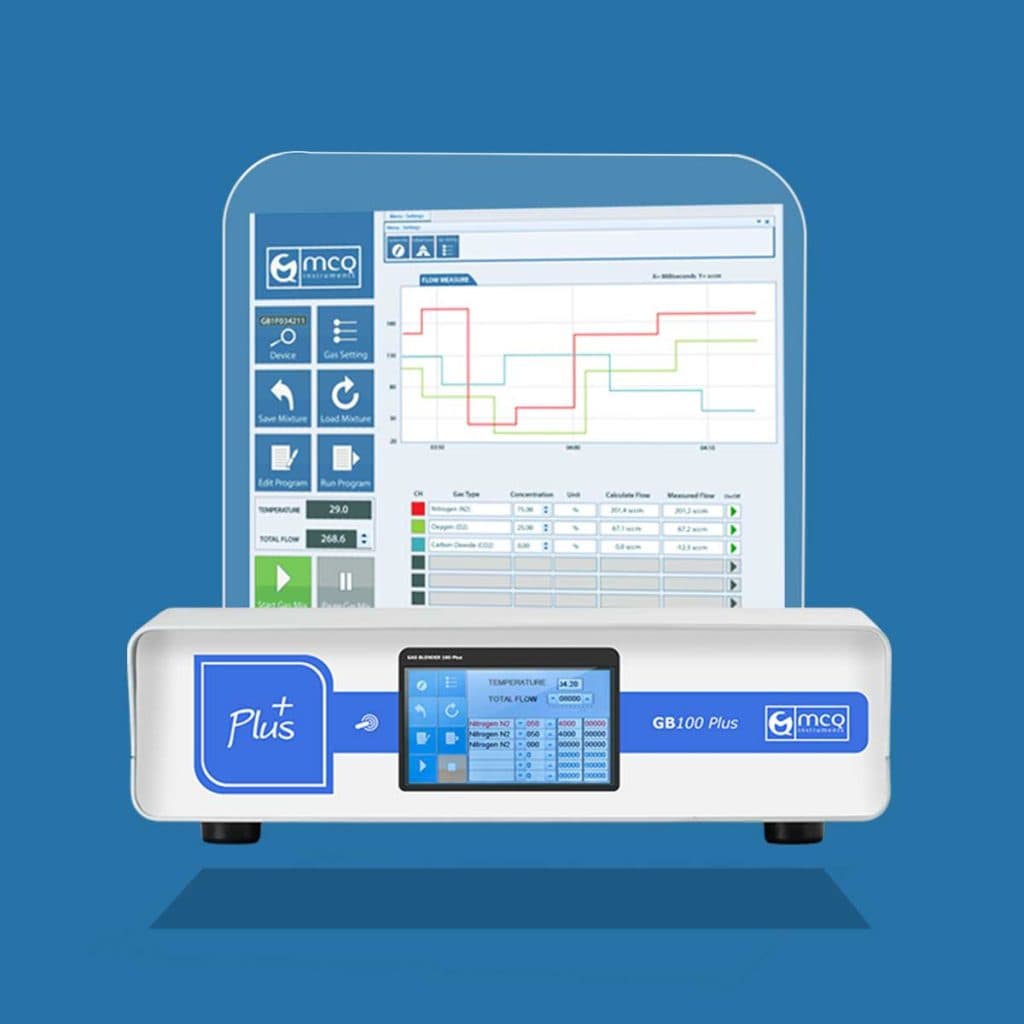
Gas Blenders & Gas Mixer Manager
The Gas Blenders Series are the improved solutions proposed by MCQ. Designed following the Lab in Box concept, the MCQ Gas Blenders are high precision instruments, easy to configure, and adaptable to many different lab applications, they offer more efficiency and an innovative quick, and easy way for mixtures management, all in a compact case.
The Gas Blenders work with up to 6 components of gas mixtures, each gas media connected to a dedicated instrument channel for which MCQ guarantees high accuracy (1.0% of setpoint), high repeatability (0.16% of reading value), and the fastest response time for setpoint value change now available in the market.
The instruments work with dry gases and the channels are always calibrated with native gases following the customer's request. For gas mixture management, the MCQ Gas Mixture Creator Software is also provided.
Easy to use, and compatible with any common desktop or laptop PC (or touch screen for the latest products), the MCQ Software allows taking complete control over the gas mixer and its functions, letting the users start working with dynamic gas mixtures immediately with full automation.
Hardware Configuration
An example of MCQ Gas Mixer hardware configuration for hypoxia research is illustrated in the schematic diagram. The gases typically used in this setup are:
- •Channel 1: Nitrogen (N₂)
- •Channel 2: Oxygen (O₂)
- •Channel 3: Carbon dioxide (CO₂)
The pure gas cylinders are connected to the instrument through 6 mm diameter tubing, and a check valve is installed on each line to prevent back-flow between channels.
Each gas is connected to and regulated by a dedicated channel of the MCQ Gas Mixer. The instrument blends the incoming gases to generate precise oxygen concentrations suitable for hypoxia or physioxia experiments. A final 6 mm outlet tube connects the mixer to the experimental system, such as a hypoxia chamber, incubator, bioreactor, or sealed culture vessel where the biological samples are maintained.
The channels operate simultaneously to produce the desired gas mixture with controlled oxygen and carbon dioxide levels while maintaining nitrogen as a balancing gas. By adjusting the flow rates of the individual channels through the MCQ control software, researchers can precisely define the target oxygen concentration or program dynamic oxygen profiles during the experiment.
Institutions using our gas mixers to maintain physiological oxygen levels
California Institute of Technology: Hirotake Komatsu Lab (organoid culture)
Shang et al. A novel approach to determine the critical survival threshold of cellular oxygen within spheroids via integrating live/dead cell imaging with oxygen modeling. American journal of physiology. Cell physiology vol. 326,4 (2024): C1262-C1271. doi:10.1152/ajpcell.00024.2024
The University of Sydney: Dr. Cristina M Cook Lab (physioxia):
Martinez et al. “A Cell Culture Model that Mimics Physiological Tissue Oxygenation Using Oxygen-permeable Membranes.” Bio-protocol vol. 9,18 e3371. 20 Sep. 2019, doi:10.21769/BioProtoc.3371
References
- •Li and Marbán. Physiological levels of reactive oxygen species are required to maintain genomic stability in stem cells. Stem cells (Dayton, Ohio) vol. 28,7 (2010): 1178-85. doi:10.1002/stem.438
- •Mirchandani et al. How oxygenation shapes immune responses: emerging roles for physioxia and pathological hypoxia. Nature reviews. Immunology vol. 25,3 (2025): 161-177. doi:10.1038/s41577-024-01087-5
- •Alva R, Gardner GL, Liang P, Stuart JA. Supraphysiological Oxygen Levels in Mammalian Cell Culture: Current State and Future Perspectives. Cells. 2022;11(19):3123. Published 2022 Oct 4. doi:10.3390/cells11193123