Gas Mixers for Plant Physiology studies
Introduction
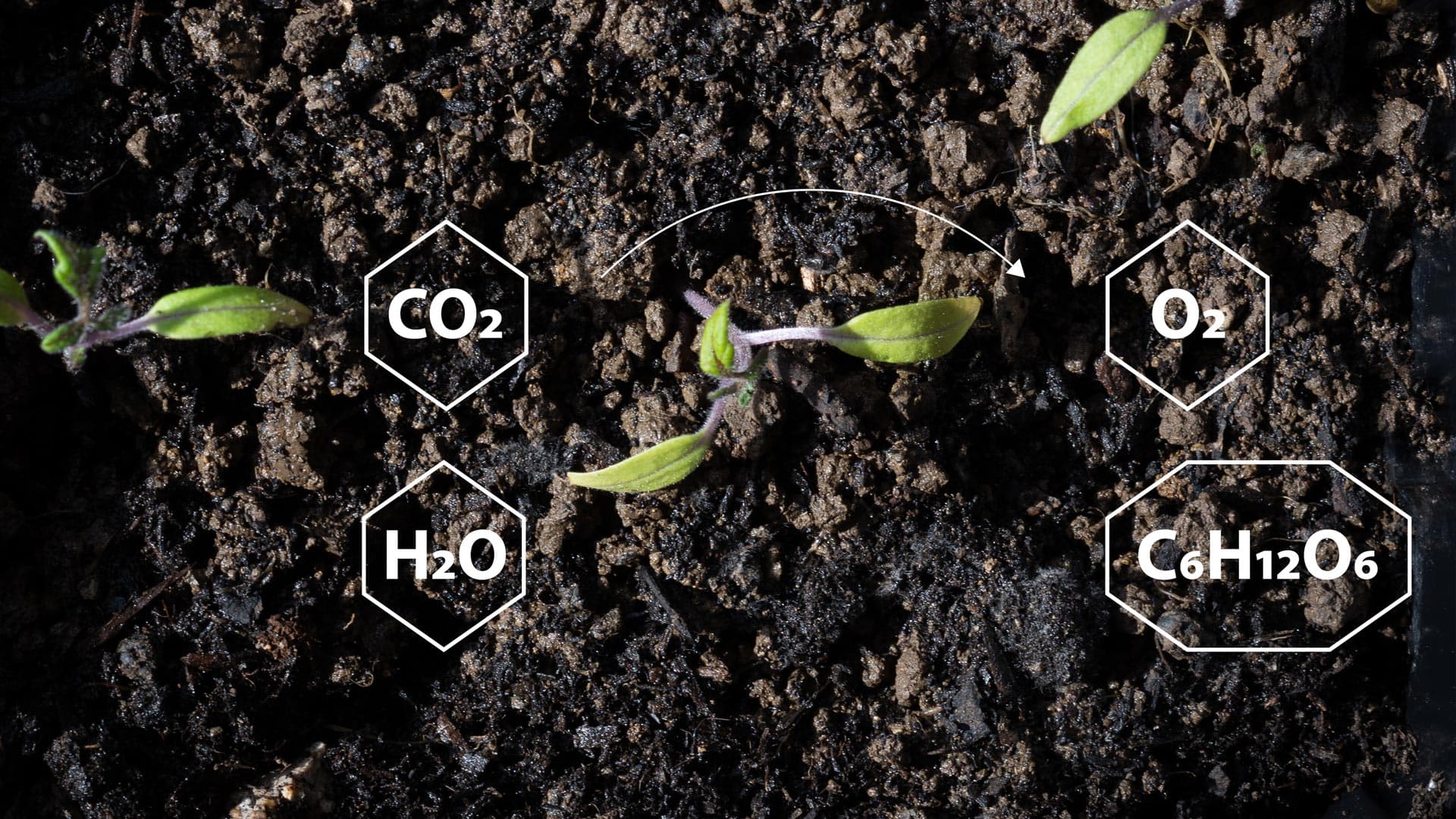
All aerobic organisms on Earth rely on oxygenic photosynthesis, a process that uses light energy to convert carbon dioxide (CO₂) and water (H₂O) into organic molecules while releasing oxygen (O₂) into the atmosphere.
Gas composition is a critical environmental factor regulating plant physiology, influencing processes such as photosynthesis, respiration, transpiration, and stress responses. In natural environments, plants are exposed to dynamic fluctuations in gases which directly affect growth, metabolism, and adaptation mechanisms.
In controlled laboratory conditions, however, these parameters are often simplified or kept constant, limiting the ability to reproduce realistic environmental scenarios. In particular, CO₂ concentration, oxygen availability, and gas exchange rates play a key role in plant responses to environmental stress, including drought, temperature changes, and atmospheric fluctuations.
For researchers working in plant physiology, ecology, and crop science, the ability to control and modulate gas composition is essential for studying plant responses under reproducible conditions.
Pain points of conventional experimental setups
Traditional plant physiology experiments often rely on fixed gas environments or manual adjustment of gas concentrations. While these approaches can provide baseline conditions, they present several limitations:
- •Difficulty in simulating dynamic environmental changes
- •Limited flexibility when testing multiple gas compositions
- •Variability introduced by manual gas handling
- •Reliance on premixed gas cylinders for specific conditions
These limitations make it challenging to perform experiments on how plants respond to changes in atmospheric composition, such as increasing CO₂ levels or fluctuating oxygen availability.
Gas Mixers for controlled plant environments
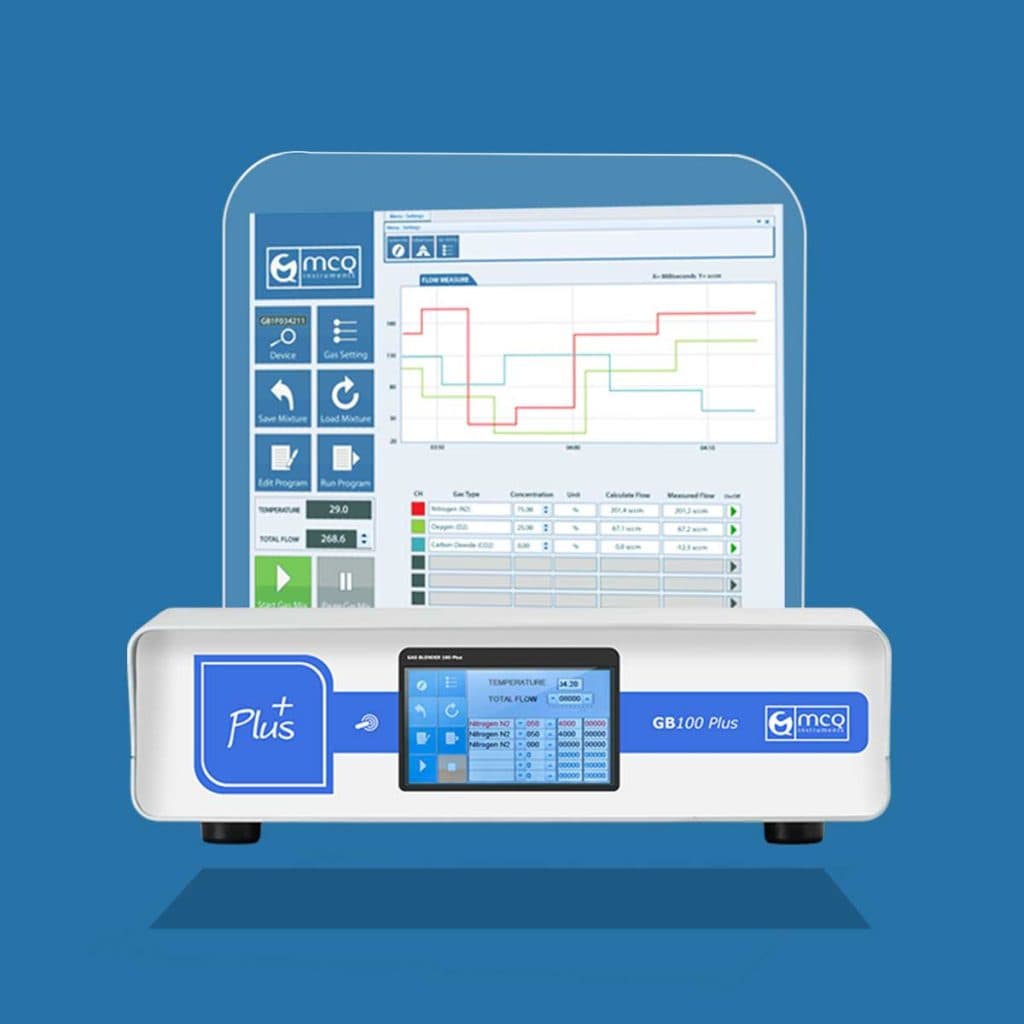
Programmable gas mixing devices provide an effective solution for generating precise and reproducible gas environments in plant physiology experiments.
By blending gases such as CO₂, O₂, and N₂ in controlled ratios, gas mixers allow researchers to simulate a wide range of environmental conditions. Gas composition can be defined and adjusted directly through the instrument software, allowing both static setpoints and dynamic gas profiles to be implemented during experiments.
The generated gas mixture can be delivered to plant growth chambers, leaf cuvettes, sealed enclosures, or larger experimental systems, ensuring consistent atmospheric conditions throughout the study.
Key Advantages
- •Precise Gas control for hypoxia studies: Gas mixers allow accurate regulation of CO₂ concentration, enabling the study of photosynthetic rates, carbon assimilation, and plant responses to elevated CO₂ levels.
- •Dynamic environmental simulation: Researchers can reproduce fluctuating environmental conditions, such as diurnal CO₂ cycles or stress-induced changes in gas composition.
- •Improved reproducibility: Automated gas control eliminates variability associated with manual gas adjustments, ensuring stable and repeatable experimental conditions.
- •Gas titration experiments: Multiple gas concentrations can be tested within a single workflow, allowing the identification of optimal conditions for plant growth or stress tolerance.
- •Scalability and process transfer: Conditions identified in small-scale experiments can be translated to larger systems, like greenhouse chambers or controlled-environment agriculture platforms.
Applications
Gas mixing systems are widely applicable in plant science research, including:
- •Photosynthesis and gas exchange measurements
- •Plant responses to elevated CO₂ (climate change studies)
- •Hypoxia and anoxia stress in roots and soils
- •Plant respiration and metabolic studies
- •Controlled environment agriculture and crop optimization
- •Microbic interaction studies
Hardware Configuration
An example of MCQ Gas Mixer hardware configuration for plant physiology applications is illustrated in the schematic setup. The gases typically used in this configuration are:
- •Channel 1: Nitrogen (N₂)
- •Channel 2: Carbon dioxide (CO₂)
- •Channel 3: Oxygen (O₂) or Compressed Air
All gases should be supplied in dry and high-purity form to ensure accurate and reproducible experimental conditions. Gas cylinders are connected to the instrument through 6 mm diameter tubing, and a check valve is installed on each line to prevent back-flow and cross-contamination between channels.
Each gas is controlled by a dedicated channel of the MCQ Gas Mixer, allowing precise adjustment of gas composition. The instrument blends the gases to generate the desired mixture, which is then delivered through an outlet line (6 mm tubing) to the experimental system.
Depending on the application, the gas mixture can be directed to different types of plant physiology setups, including:
- •Leaf cuvettes for gas exchange and photosynthesis measurements
- •Plant growth chambers or grow boxes for controlled environment studies
- •Sealed chambers for stress experiments (e.g., hypoxia, elevated CO₂)
- •Disposable gas bags for short-term exposure or transport experiments
The gas mixer enables both static gas conditions (fixed CO₂ or O₂ levels) and dynamic profiles, such as gradual CO₂ increases or fluctuating environmental conditions. Gas composition is defined and controlled via the MCQ software, allowing users to program sequences of setpoints during the experiment.
Conclusion
Precise control of gas composition is essential for understanding plant responses to environmental conditions. Programmable gas mixers allow researchers to accurately regulate and dynamically adjust gas concentrations, supporting the study of complex physiological processes under controlled and reproducible conditions.
By enabling gas titration experiments and realistic environmental simulations, gas mixing technology enhances experimental flexibility, improves data quality, and supports the development of more accurate models of plant physiology and environmental adaptation.
- •Stirbet, et al. Photosynthesis: basics, history and modelling, Annals of Botany, Volume 126, Issue 4, 14 September 2020, Pages 511-537, doi.org/10.1093/aob/mcz171
- •Bunce J. Leaf Gas Exchange and Photosystem II Fluorescence Responses to CO2 Cycling. Plants (Basel). 2023;12(8):1620. Published 2023 Apr 11. doi:10.3390/plants12081620
- •Haghpanah, Mostafa et al. “Drought Tolerance in Plants: Physiological and Molecular Responses.” Plants (Basel, Switzerland) vol. 13,21 2962. 23 Oct. 2024, doi:10.3390/plants13212962