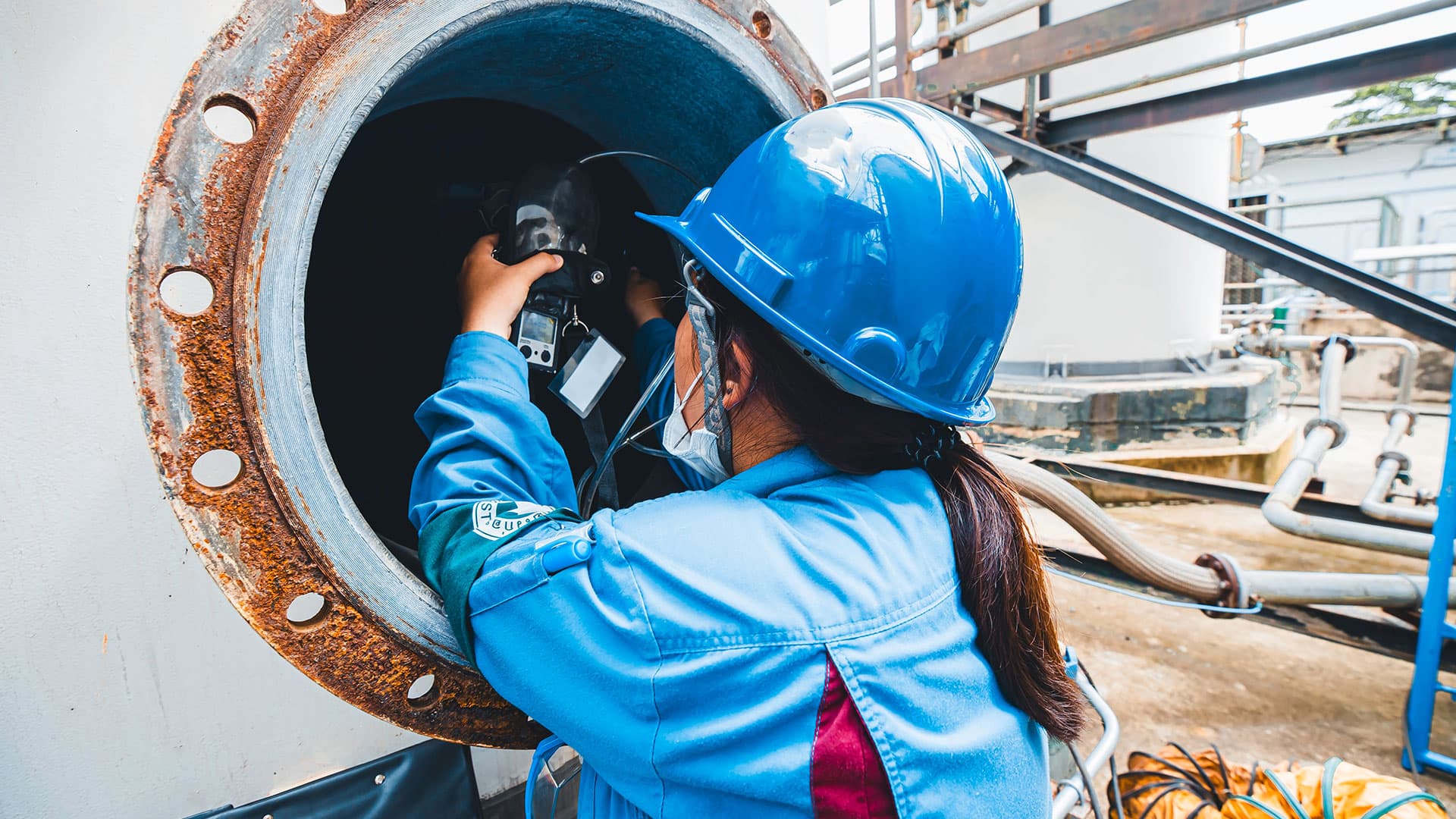
Gas Mixers for Hydrogen Sensor Testing & Safe Deployment
From leak detection to fuel cell safety: precise hydrogen gas mixtures for sensor validation

Introduction
Hydrogen is emerging as one of the most important energy carriers of the clean-energy transition, powering fuel cells, energy-storage systems, and a rapidly expanding network of production, transport, and refuelling infrastructure. Yet hydrogen is colourless, odourless, and highly flammable across a wide concentration range in air, which makes reliable gas detection a fundamental safety requirement wherever hydrogen is generated, stored, or used.
To ensure that a hydrogen safety sensor performs correctly, it must be tested and calibrated against accurately known hydrogen concentrations before it is deployed in the field. A sensor destined to trigger an alarm at a defined threshold can only be trusted once its response has been characterised across the full range of concentrations it may encounter, from trace leaks of a few parts per million up to the lower flammability limit and beyond.
This validation step presents a specific technical challenge. Hydrogen sensor testing requires the generation of stable, repeatable gas mixtures at precisely defined concentrations, often spanning several orders of magnitude. Preparing these mixtures from premixed cylinders alone is slow, inflexible, and expensive: a separate cylinder is required for every concentration, and any change to the test plan means sourcing and storing additional cylinders.
Programmable gas mixing systems address this limitation directly. By blending pure hydrogen with an inert carrier such as nitrogen, a gas mixer can generate any target concentration on demand and automatically step through a sequence of setpoints within a single experiment.
This approach provides several advantages:
- •Generation of any hydrogen concentration on demand, from trace ppm levels to high percentages, without changing cylinders
- •Accurate and reproducible mixtures for characterising sensor response, sensitivity, and detection thresholds
- •Automated stepping through multiple concentration setpoints to build complete calibration curves
- •Safe dilution of hydrogen below or around the flammability limit under controlled conditions
- •Consistent test conditions that support compliance with recognised standards such as ISO 26142 and UL 2075
Gas mixers allow developers and test laboratories to rapidly explore the full response range of a hydrogen sensor, identify its detection threshold, and verify its accuracy and repeatability, simply by importing a dynamic program into the instrument.
In conclusion, this approach makes our mixers particularly valuable throughout the hydrogen sensor lifecycle, from research and development of new sensing materials, through production calibration, to periodic verification of sensors already installed in fuel cell systems and hydrogen infrastructure.
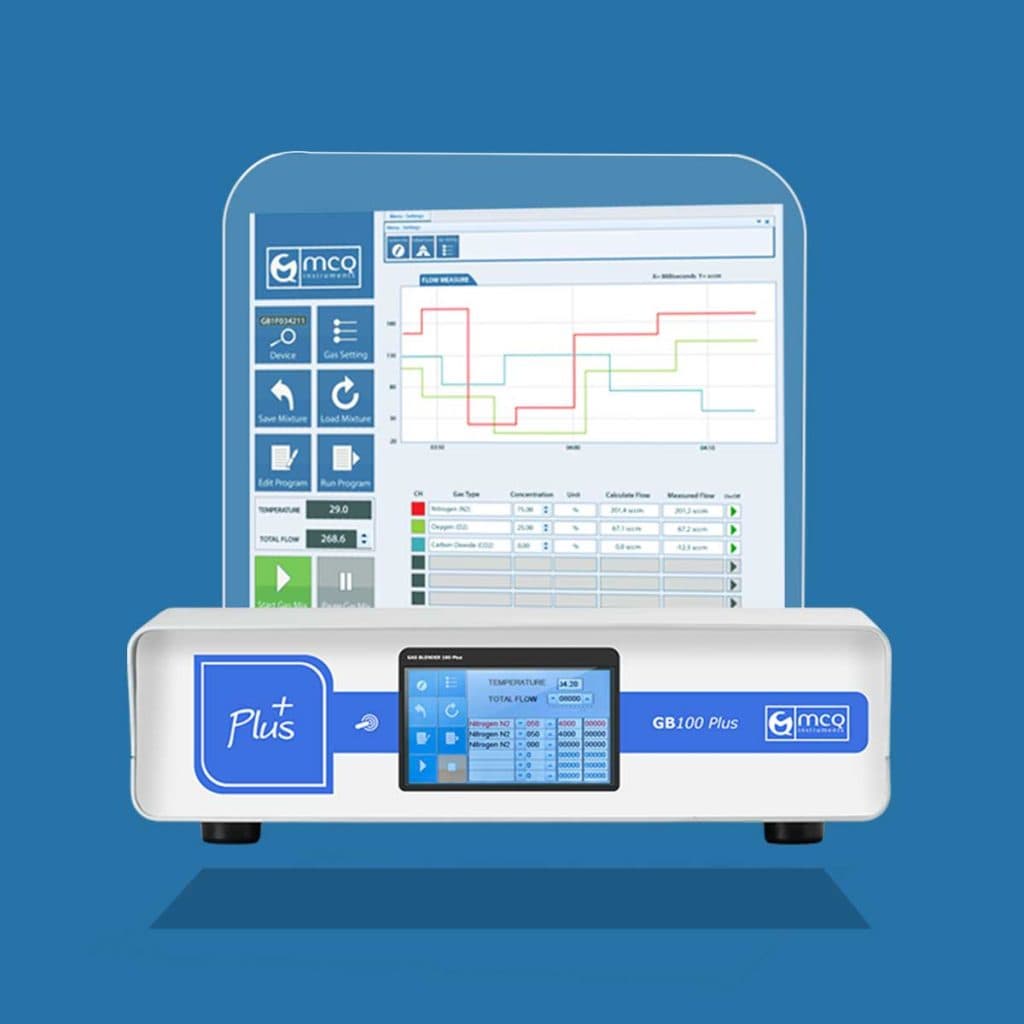
Gas Blenders & Gas Mixer Manager
The Gas Blenders Series are the improved solutions proposed by MCQ. Designed following the Lab in Box concept, the MCQ Gas Blenders are high precision instruments, easy to configure, and adaptable to many different lab applications, they offer more efficiency and an innovative quick, and easy way for mixtures management, all in a compact case.
The Gas Blenders work with up to 6 components of gas mixtures, each gas media connected to a dedicated instrument channel for which MCQ guarantees high accuracy (1.0% of setpoint), high repeatability (0.16% of reading value), and the fastest response time for setpoint value change now available in the market.
The instruments work with dry gases and the channels are always calibrated with native gases following the customer's request. For gas mixture management, the MCQ Gas Mixture Creator Software is also provided.
Easy to use, and compatible with any common desktop or laptop PC (or touch screen for the latest products), the MCQ Software allows taking complete control over the gas mixer and its functions, letting the users start working with dynamic gas mixtures immediately with full automation.
Hardware Configuration
The gases typically used in this setup are:
- •Channel 1: Nitrogen (N₂) — carrier and balancing gas
- •Channel 2: Hydrogen (H₂) — target analyte
- •Channel 3: Air or Oxygen (O₂) — optional, for testing sensor behaviour in realistic ambient or cross-sensitivity conditions
The pure gas cylinders are connected to the instrument through 6 mm diameter tubing, and a check valve is installed on each line to prevent back-flow between channels.
Each gas is connected to and regulated by a dedicated channel of the MCQ Gas Mixer. The instrument blends the incoming gases to generate precise hydrogen concentrations suitable for sensor testing and calibration. A final 6 mm outlet tube connects the mixer to the test apparatus, such as a sealed sensor test chamber or flow cell, where the hydrogen sensor under evaluation is mounted.
The channels operate simultaneously to produce the desired gas mixture with a controlled hydrogen concentration while maintaining nitrogen as a balancing gas. By adjusting the flow rates of the individual channels through the MCQ control software, developers can precisely define the target hydrogen concentration or program dynamic concentration profiles to map the sensor's full response curve.
For applications where hydrogen is mixed with air or oxygen, the gas mixer allows the concentration to be kept under controlled conditions around the flammability limit, supporting safe and repeatable testing of sensor behaviour in realistic operating environments.
Institutions and research using gas mixing for hydrogen sensor development
Hydrogen safety sensing is an active field of research and industrial development. Independent national laboratories operate dedicated hydrogen safety sensor testing facilities in which fully automated test apparatus control both environmental parameters (temperature, pressure, relative humidity) and gas parameters (flow and composition) to assess sensor performance against national and international standards and Department of Energy targets.
In published sensor-testing protocols, gas dilution systems are routinely used to mix hydrogen or gas standards with nitrogen to generate defined test compositions: for example, sensor assemblies tested at a controlled outlet flow, with the test enclosure flushed with nitrogen for safety due to the potential for explosive mixtures of hydrogen and oxygen from air. New sensor designs for harsh environments such as fuel cell exhausts have been developed and validated to measure hydrogen across ranges from 0 to 10% and up to 100%, with uncertainties as low as 0.5% H₂.
These workflows — spanning the development of new sensing materials, the validation of prototype sensors, and the functional testing of sensors installed in fuel cell exhaust streams — all depend on the ability to deliver accurately known hydrogen concentrations to the sensor under test. Programmable gas mixing is the enabling tool for this requirement.
References
- •Buttner, W J et al. An overview of hydrogen safety sensors and requirements. International Journal of Hydrogen Energy vol. 36,3 (2011): 2462-2470. doi:10.1016/j.ijhydene.2010.04.176
- •Boon-Brett, L et al. Identifying performance gaps in hydrogen safety sensor technology for automotive and stationary applications. International Journal of Hydrogen Energy vol. 35,1 (2010): 373-384. doi:10.1016/j.ijhydene.2009.10.064
- •Palmisano, V et al. Selectivity and resistance to poisons of commercial hydrogen sensors. International Journal of Hydrogen Energy vol. 40,35 (2015): 11740-11747. doi:10.1016/j.ijhydene.2015.02.120
- •Aldhafeeri, T et al. A Review of Methane Gas Detection Sensors: Recent Developments and Future Perspectives. Inventions vol. 5,3 (2020): 28. doi:10.3390/inventions5030028